


How Waste Heat Recovery with Heat Exchangers Works
You are here:
- Home
- How Waste Heat Recovery with H…
Source: COLASIT AG, Spiez, Switzerland
Waste Heat Recovery with Heat Exchangers
Industrial waste heat recovery is a key factor in improving energy efficiency and sustainability in industrial processes. Instead of allowing valuable waste heat to escape unused, it is efficiently recovered and reused in other processes. Modern heat exchangers are at the core of this technology. They transfer excess thermal energy from exhaust air, wastewater or process waste heat to another medium, which can then be used for heating, cooling or additional production processes. This not only reduces energy consumption but also significantly lowers operating costs.
Industrial Applications and Benefits
Whether in the chemical industry, HVAC systems, biogas plants or food processing, waste heat recovery has become an essential solution for improving energy efficiency across a wide range of industries. In ventilation systems, heat exchangers preheat or cool incoming fresh air, reducing the demand on heating and cooling systems. In the chemical industry, waste heat generated by energy-intensive processes is recovered and reused to support downstream production steps. These applications not only reduce the consumption of fossil fuels but also make a valuable contribution to lowering CO₂ emissions.
Tailor-Made Solutions from Calorplast
The requirements for waste heat recovery systems are as diverse as the industries in which they are used. Calorplast develops innovative, tailor-made solutions to ensure every customer receives the optimum system for their specific application. Our heat exchangers are manufactured from corrosion-resistant materials, providing maximum reliability and long service life even in demanding environments such as the chemical industry or applications involving corrosive exhaust gases. In addition, our flexible designs allow seamless integration into existing systems.
A Contribution to the Environment and the Future
In addition to their economic benefits, waste heat recovery systems make a significant contribution to environmental protection. By reusing thermal energy, the demand for new energy resources is reduced, making it easier for companies to achieve their sustainability goals while complying with increasingly stringent environmental regulations.
Discover how Calorplast’s innovative technologies and customized solutions can maximize your energy efficiency, reduce operating costs and minimize environmental impact. Waste heat recovery is more than just a technological advancement—it is an investment in a sustainable and profitable future.
How Waste Heat Recovery with Heat Exchangers Works in Ventilation Systems
Waste heat recovery with heat exchangers is a key technology in modern industrial ventilation systems, helping companies improve energy efficiency, reduce operating costs and lower CO₂ emissions. Heat exchangers play a crucial role by transferring thermal energy from exhaust air to incoming fresh air without allowing the two air streams to mix. This highly efficient process significantly reduces the demand for additional heating or cooling while improving the overall energy performance of the ventilation system.
In industrial environments such as food processing, chemical manufacturing and pharmaceutical production, large amounts of waste heat are generated every day. Instead of allowing this valuable thermal energy to escape unused, industrial heat exchangers recover the heat and feed it back into the ventilation system. During winter, the incoming fresh air is preheated using the warm exhaust air, reducing the load on heating systems. During summer, the exhaust air can be used to precool the incoming fresh air, minimizing the energy required for mechanical cooling. The result is a balanced indoor climate, improved energy efficiency and lower operating costs.
Industrial Applications: Efficiency and Versatility
Calorplast plastic heat exchangers are designed to meet the specific requirements of a wide range of industries. In processes with high internal heat loads, they efficiently remove excess thermal energy and improve overall process efficiency. Instead of relying on additional air conditioning systems, integrated waste heat recovery naturally cools the incoming fresh air, making this solution particularly beneficial for production facilities with high thermal loads. This not only reduces energy consumption but also improves working conditions while increasing the stability and reliability of production processes.


Technology That Delivers
The operating principle of heat exchangers is simple yet highly effective. Two separate air streams—exhaust air and incoming fresh air—pass through the heat exchanger, where thermal energy is transferred from one medium to the other without allowing the air streams to mix. Advanced materials and innovative heat exchanger designs maximize heat transfer efficiency while minimizing energy losses. The result is continuous, reliable waste heat recovery and long-term energy savings.
Sustainable Benefits for Industrial Applications
Industrial companies benefit not only from lower operating costs through reduced energy consumption but also from meeting the growing demands for sustainability and climate protection. Waste heat recovery with heat exchangers is a future-proof solution that reduces energy consumption, lowers CO₂ emissions and minimizes environmental impact. At the same time, these systems help companies comply with increasingly stringent environmental regulations and meet ESG requirements, creating a valuable competitive advantage.
Waste heat recovery with heat exchangers is an excellent example of how innovative technologies can improve energy efficiency while optimizing industrial processes for a more sustainable future.

Different Waste Heat Recovery Methods Using Heat Exchangers
Waste heat recovery is a key component of energy-efficient systems, using innovative technologies to minimize energy losses and improve overall process efficiency. Two main methods are used: recuperative heat recovery and regenerative heat recovery.
Both methods help reduce energy losses, lower operating costs and protect the environment, making them essential technologies for modern industrial processes and building services engineering.
Recuperative Heat Recovery
(Latin: recuperare = to recover)
Recuperative heat recovery uses heat exchangers to transfer thermal energy directly from one medium to another without intermediate storage. This highly efficient method is ideal for continuous processes, such as industrial ventilation systems and process engineering applications.
Regenerative Heat Recovery
(Latin: regeneratio = to regenerate)
Regenerative heat recovery temporarily stores thermal energy in a storage medium before transferring it to the colder medium. This method is particularly suitable for applications with fluctuating operating conditions and enables exceptionally high levels of energy recovery.
Which Industrial Heat Exchanger Is Best for Your Waste Heat Recovery System?
Choosing the right heat exchanger for a waste heat recovery system depends on the specific requirements of the application. Whether a recuperative or regenerative heat recovery system is the best solution depends on factors such as process requirements, energy demand and the operating environment.
Recuperative systems use compact heat exchangers to transfer thermal energy directly between two media, while regenerative systems require heat exchangers with thermal storage components to temporarily store and release heat. A thorough analysis of the application and operating conditions is therefore essential to achieve maximum energy efficiency and cost-effectiveness.
With expert engineering support and high-quality heat exchanger solutions, Calorplast provides the ideal system for every challenge—whether recuperative or regenerative.
Closed-Loop Heat Recovery Systems
The Closed-loop heat recovery system (CLHR) is one of the most efficient solutions in ventilation technology and sets the benchmark for heat recovery. In this system, the warm exhaust air heats a circulating heat transfer medium within the heat exchanger. The stored thermal energy is then transferred to the incoming cold fresh air, significantly reducing the energy required to heat the supply air.
This technology offers outstanding energy efficiency, reliability and flexibility. It is particularly suitable for applications where exhaust air and supply air must remain physically separated, such as industrial facilities and hygiene-critical environments. At the same time, it reduces operating costs while minimizing the environmental footprint.
Calorplast heat exchangers are the ideal choice for run-around coil systems. Durable, corrosion-resistant, and custom-engineered to meet your specific requirements, they deliver maximum energy efficiency and sustainable climate control solutions. Discover our innovative products and optimize the performance of your ventilation system.
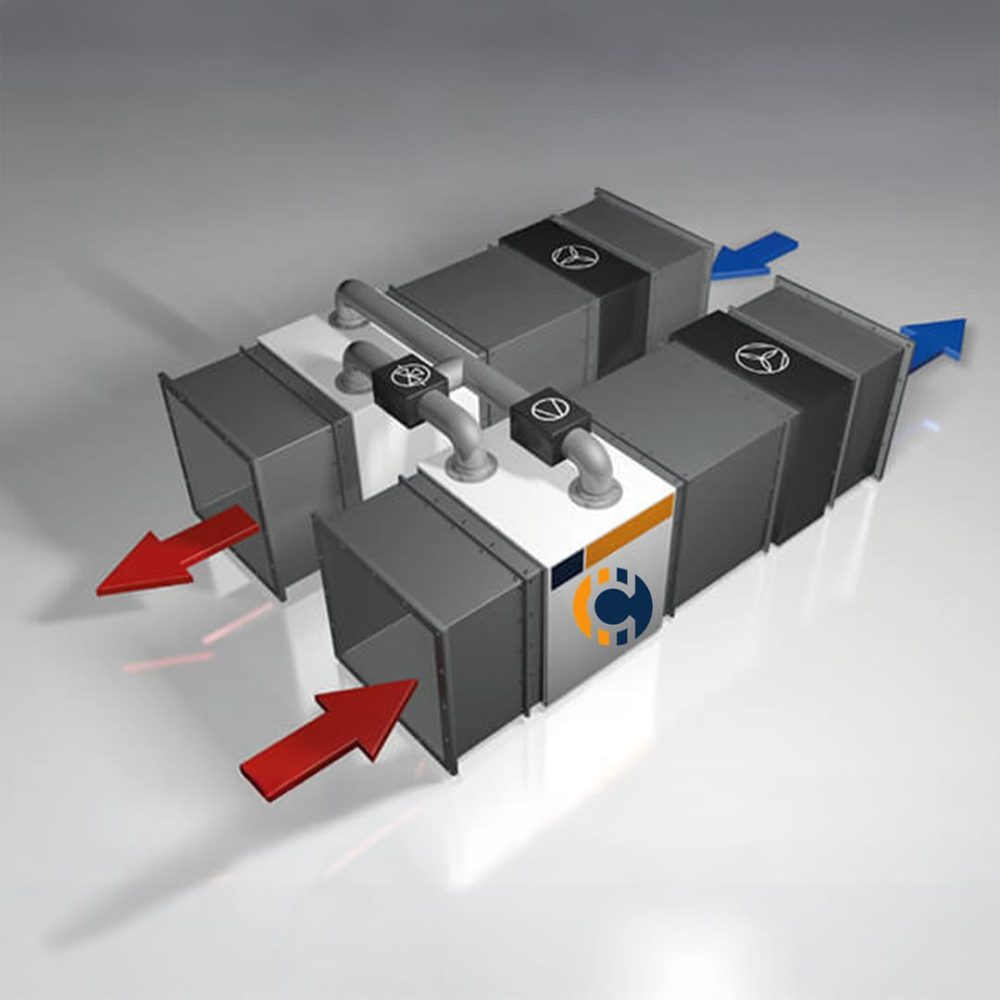

Flexible Solutions with Heat Pumps and Calorplast Heat Exchangers
Die Kombination von Wärmetauschern mit Wärmepumpen eröffnet vielseitige Möglichkeiten für energieeffiziente Systeme in der Lüftungstechnik und darüber hinaus. Calorplast Wärmetauscher spielen dabei eine Schlüsselrolle, indem sie die Wärmeübertragung optimieren und gleichzeitig die Betriebskosten reduzieren.
Combining heat exchangers with heat pumps creates highly efficient energy solutions for industrial ventilation systems and many other applications. Calorplast heat exchangers play a key role by maximizing heat transfer while reducing operating costs.
Looking for Heat Transfer Solutions for Your Business?
Then get in touch with our experts today!
Benefits for Your Business
Lower heating costs, reduced humidity and increased property value. Integrating modern waste heat recovery systems with Calorplast heat exchangers offers numerous advantages for industrial and commercial applications. In addition to reducing heating costs through improved energy efficiency, the technology helps control humidity levels, creating a healthier indoor environment while protecting buildings from moisture-related damage.
At the same time, these solutions increase both the sustainability and the long-term value of your property by meeting modern environmental and energy efficiency standards. Thanks to their durability and corrosion resistance, Calorplast heat exchangers can be individually adapted to your requirements—from waste heat recovery systems to integrated heat pump cooling solutions.
Key Benefits at a Glance:
Energy Savings
Reduced CO₂ Emissions
Lower Operating Costs
Low Maintenance Requirements
Trust Calorplast’s innovative heat exchanger technology to combine sustainability with economic efficiency and prepare your business for a more energy-efficient future.
Interesting facts and information from the world of CALORPLAST


